
They all say “we measure skills.” They don't mean the same thing.
Sit through a few skills-intelligence demos and the language blurs together — every product is "verified", "AI-powered", "data-driven", "board-ready". Strip the marketing away and there are really only three things a tool can be doing underneath, and they carry very different levels of confidence. Knowing which one you're buying is the difference between a skill rating you can defend and one that collapses the first time someone challenges it.
The three levels of “measuring” a skill
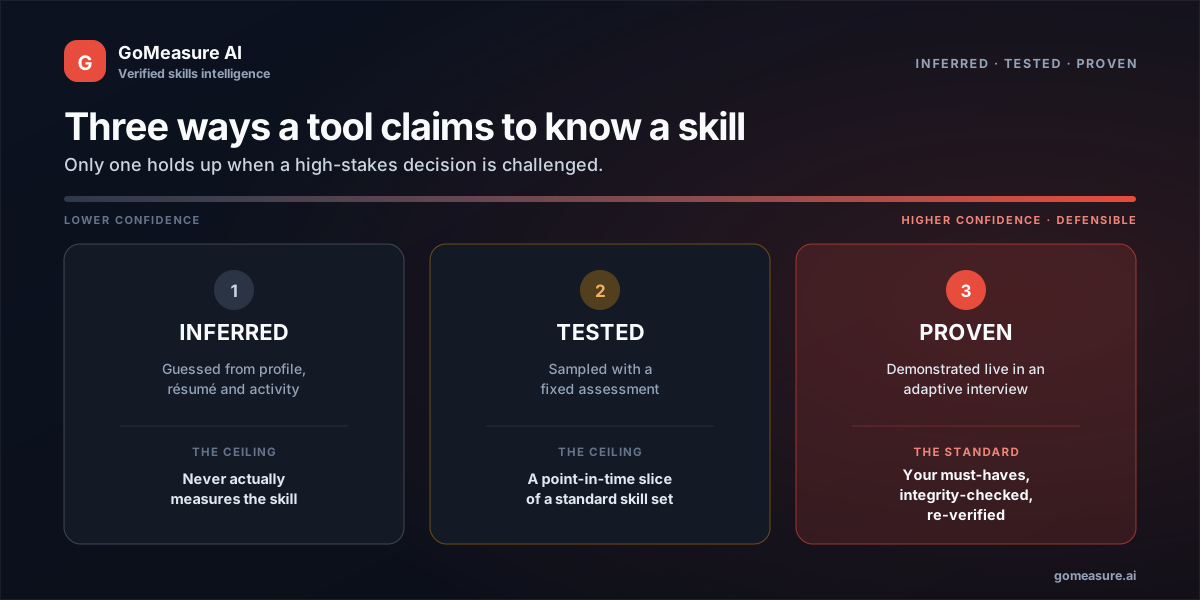
Inference is the weakest: it dresses a guess up as data. Testing is real measurement — a genuine step up — but it samples a standard set of skills at a single moment, and a determined candidate can prepare for it. Proof is the demonstration itself: the skill shown, probed and evidenced, so the rating survives scrutiny. Only proof answers the question that matters in a challenged decision — can you show your working?
Measuring isn't enough — you have to measure the right skills
Here's the trap that catches even buyers who correctly avoid pure inference. A tool can genuinely measure — and still measure the wrong skills, because it tests a generic role rather than yours. So there are really two questions, not one: does it measure (rather than guess), and does it measure your must-haves (rather than a template)?
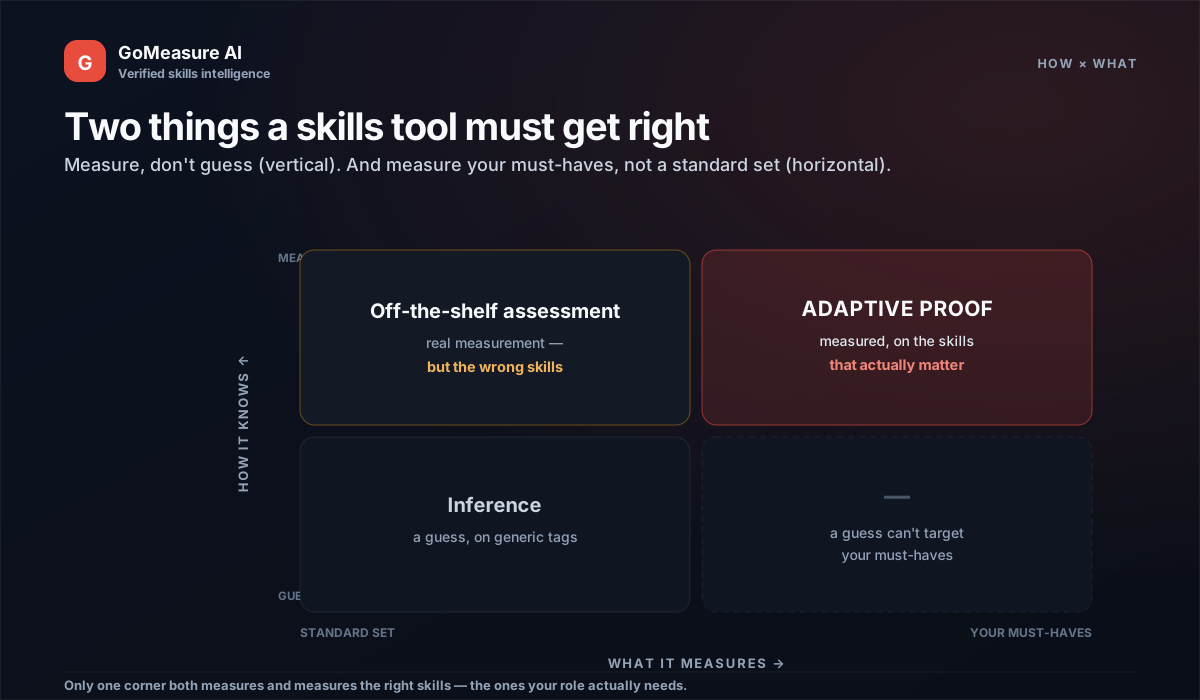
An off-the-shelf assessment sits top-left: real measurement, but of a fixed skill set that only partly matches your role — the assessment mismatch. The corner you actually want is top-right: measurement and your must-haves — which needs a tool that adapts to your role's real skills rather than a template built for everyone.
The buyer's scorecard
You don't have to take any vendor's word for which tier they're in. Five questions surface it fast — and the gap between a weak answer and a strong one is exactly the gap between inference, testing and proof.
None of this makes testing “bad”
Be fair to each approach — the goal is fit, not a verdict. Inference is fine for rough, directional signals across a big population where nothing important hangs on any single number. Testing is genuinely good when the standard skill set really does match your role, and for knowledge you can sample cleanly — it's fast and scalable. Proof is what you need when the decision is high-stakes, the skills are applied rather than purely factual, or you may have to defend the outcome — hiring, promotion, mobility, succession.
The question isn't “which approach is best?” It's “what does this decision need?” The more it costs to be wrong, the further up the ladder — from inferred to tested to proven — you should insist on going.
The short version
- Every tool says it “measures” skills; underneath, it's inferring, testing or proving — three very different levels of confidence.
- Inference guesses; testing samples a standard set at a point in time; proof has the person demonstrate the skill, on evidence.
- Measuring isn't enough — a tool can measure real skills but the wrong ones. Check both: does it measure, and does it measure your must-haves?
- Use the five-question scorecard to place any vendor: where the rating came from, whose skills it covers, whether it's fakeable, and whether you could defend it.
- Match the approach to the stakes — the more it costs to be wrong, the more you should insist on proof.
Run the scorecard on us.
GoMeasure sits in the top tier: skills proven by demonstration, on your role's real must-haves, integrity-checked and re-verified — with the evidence on record. Bring one role and one decision, and see where we land on every question above.
See Skill Proof in Action The concept behind proof →The whitepaper, the playbooks and new research — by email.
Skills intelligence for HR and business leaders. We'll send the “Jobs to Skills” whitepaper and share new frameworks as we publish them. No noise.
One email now, occasional research later. Unsubscribe anytime.