
Two questions, not one
Most HR functions run performance management like clockwork — goals, reviews, ratings, calibration — and approach skills as a newer, softer, optional add-on. The unspoken assumption is that the two overlap: if we already rate performance, isn't skill just the same thing, measured differently?
It isn't. Performance and skill answer two genuinely different questions, and an organisation needs both because most real talent decisions depend on the answer to both:
- Performance asks: what results did this person produce, in this context?
- Skill asks: what capability did they demonstrate, at what proficiency, on what evidence — and where else could it apply?
One is a verdict on the past. The other is a read on what's possible. Confuse them, and you will reward the wrong people, develop the wrong things, and quietly lose good ones.
Why you need both: the four quadrants
The quickest way to feel the difference is to plot people on both axes at once — performance against verified skill. Each quadrant demands a different action, and you cannot tell which quadrant someone is in unless you have measured both.
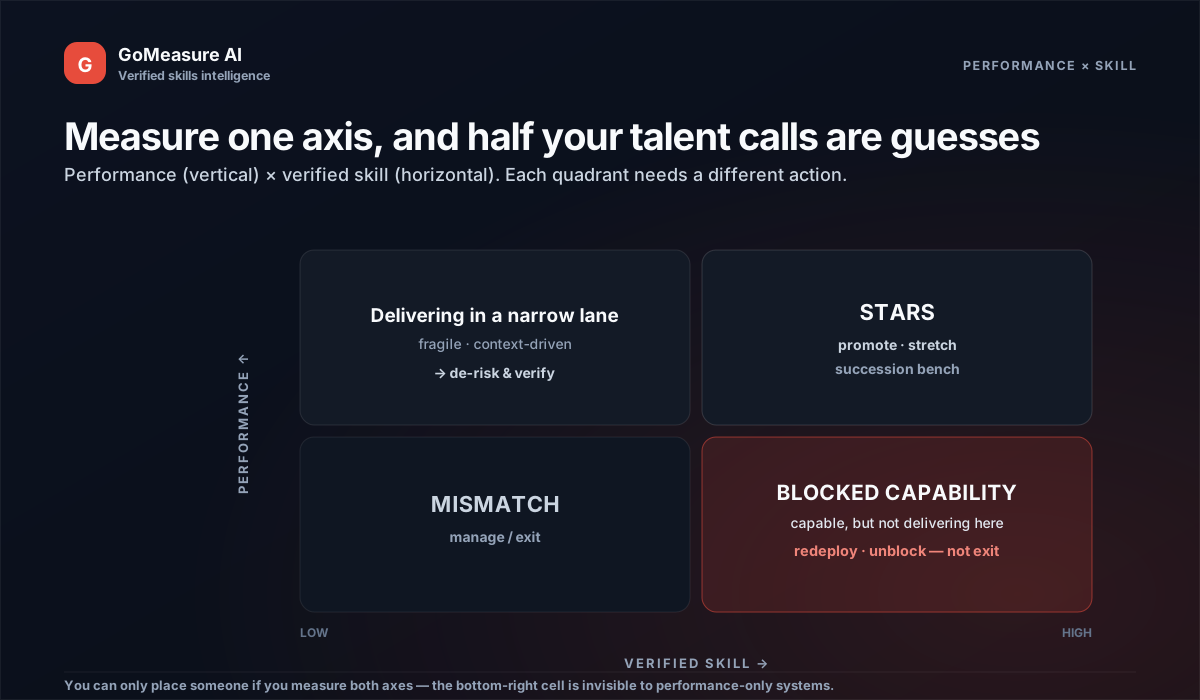
The most expensive cell is the bottom-right: blocked capability — someone genuinely skilled who isn't delivering because of role fit, resources or context, not ability. A performance-only organisation reads them as a low performer and manages them out — losing real, provable capability it paid to build. The only way to distinguish "capable but blocked" from "genuinely mismatched" is to measure skill independently of performance. Everything else in this article follows from that one fact.
Performance is not the same as skill
This is the conceptual heart of it. Performance is evidence about capability — a useful signal — but it is not identical to capability, because results are produced by more than the individual.
Someone can perform well for reasons that don't prove every underlying skill:
- a strong team around them
- a favourable territory or market
- good systems, tooling and support
- a mature product that sells itself
- timely manager intervention
- inherited customer relationships
And someone can hold a genuinely strong skill yet perform poorly, for reasons that have nothing to do with their ability:
- poor role fit
- limited opportunity to apply it
- inadequate resources
- unclear objectives
- organisational constraints
- a newly assigned role they haven't ramped in yet
Performance is evidence about capability, but it is not identical to capability. Treat a result as proof of every underlying skill and you will promote luck and punish context.
Four objects, not one rating
Because performance and skill come apart, a serious talent system has to keep four distinct objects separate — rather than collapsing them into a single performance score or a vague "high-potential" tag. Each answers its own question and drives its own decision.
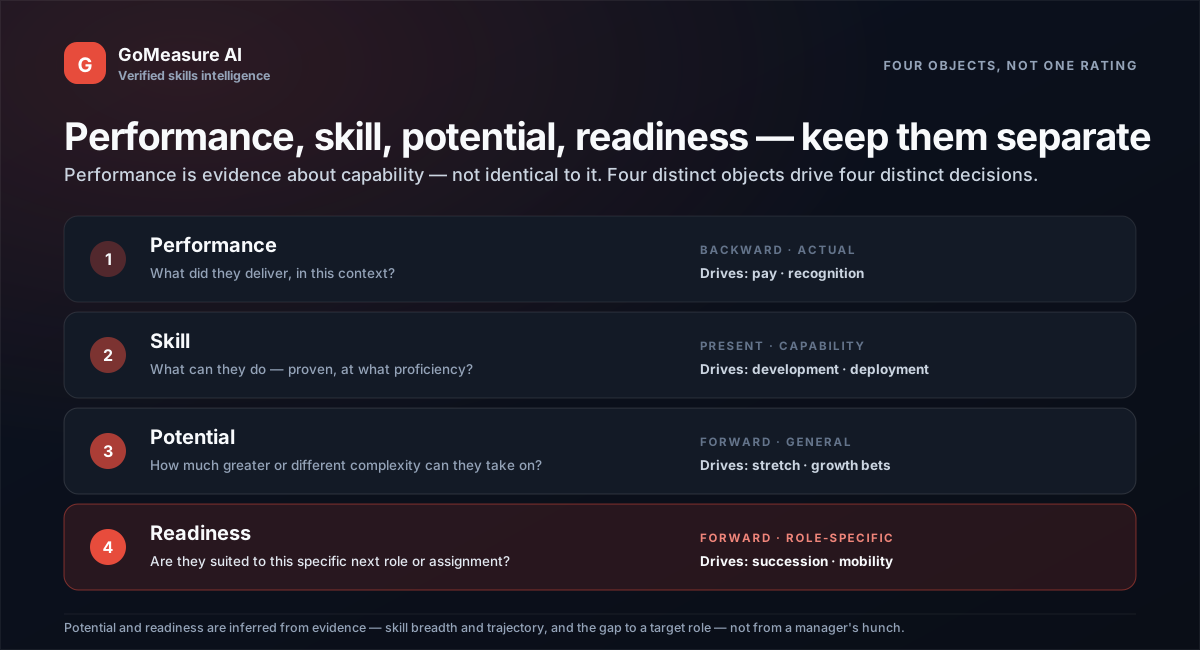
- Performance — the outcomes actually delivered.
- Skill — the capability to perform an activity, at a proficiency, on evidence.
- Potential — the capacity to handle greater or different complexity.
- Readiness — suitability for a specific future role or assignment.
The distinction between the last two matters and is usually lost: potential is general headroom; readiness is fit for a named next seat. A person can have high potential and still not be ready for this particular role — and a succession plan built on "potential" instead of readiness will keep putting promising people into the wrong chairs.
Which decision reads which object
Kept separate, the four objects route cleanly to decisions. Most talent mistakes are a decision reading the wrong object — promoting on performance alone, or planning succession on "potential" instead of readiness.
Why this matters more in the AI era
There's a reason to fix this now rather than later. As AI tools raise everyone's output, performance can rise while underlying capability quietly erodes — the phenomenon of cognitive debt. If performance is your only lens, an AI-boosted result reads as a stronger employee, even as the human skill beneath it thins out. Performance measurement, left alone, now actively hides deskilling.
That is exactly when the second axis earns its keep. Verified skill is what tells you whether the result reflects a person who is genuinely more capable — or a person leaning on a tool they don't understand. In an AI-augmented workforce, measuring skill isn't a nice-to-have alongside performance. It's the thing that keeps performance data honest.
Key takeaways
- Performance and skill answer two different questions — "did they deliver?" versus "can they do it?" — and most talent decisions need both.
- Performance is evidence about capability, not identical to it: strong results can come from context, and strong skills can sit behind weak results.
- The most costly blind spot is "blocked capability" — capable people not delivering in their current context, whom performance-only systems wrongly manage out.
- Keep four objects separate: performance (delivered), skill (can do), potential (headroom), readiness (fit for a specific next role). Collapsing them causes mispromotion and bad succession.
- Potential and readiness must be evidence-inferred, not gut-felt — and in the AI era, verified skill is what keeps rising performance numbers honest.
You already measure performance. Now measure capability.
Keep your performance system. GoMeasure adds the axis it can't give you: verified skill — capability proven on evidence, with potential and readiness inferred from it, not guessed. Turn a one-axis performance picture into a full talent operating view for hiring, development, mobility and succession.
See Skill Proof in Action Explore the Skills Graph →The whitepaper, the playbooks and new research — by email.
Skills intelligence for HR and business leaders. We'll send the “Jobs to Skills” whitepaper and share new frameworks as we publish them. No noise.
One email now, occasional research later. Unsubscribe anytime.