
The most expensive costs are the ones you can't see
Open any board pack and you'll find the workforce costs laid out clearly: salaries, recruiting spend, the L&D budget, the cost of attrition. What you won't find is a line that says "cost of not knowing what our people can do."
That line doesn't exist — and that's precisely why it's expensive. A cost you can see gets managed. A cost that hides inside other numbers gets paid, quarter after quarter, by everyone, forever. Skills blindness is the second kind.
Where the cost actually hides
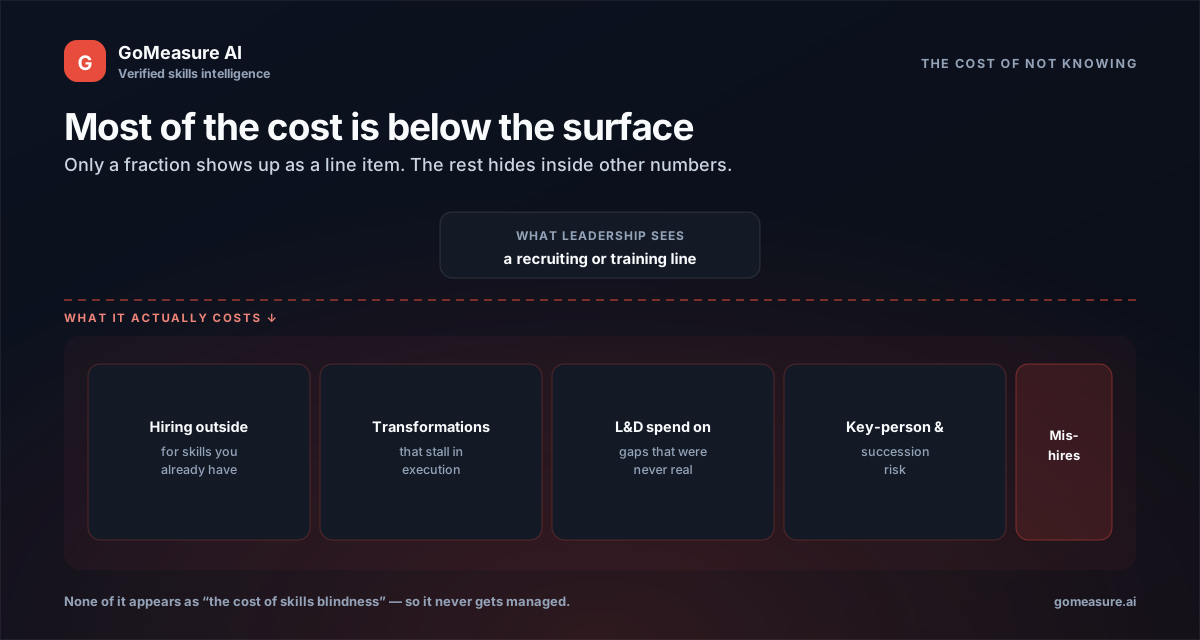
The visible part — a recruiting or training line — is the tip. The real cost sits below the surface, spread across numbers that look like something else.
Why it stays invisible
Each of these gets filed under its symptom, never its cause. The external hire is "recruiting cost." The failed programme is "bad execution." The wrong promotion is "a people issue." Nobody adds them up, because nothing connects them — and the thing that connects them, unreliable skills data, isn't on any report.
So the cost compounds quietly. Decisions made on a poor picture of capability lead to more decisions made on an even poorer one, and the bill lands in five different places where no single owner sees the total.
What changes when capability is measured
The fix isn't a cost-cutting exercise — it's making the hidden cost visible so it can shrink. When capability is measured on evidence and kept current, the same five buckets move the other way:
- You fill more roles from inside, because you can see who can already do the job — on proof, not a self-rating.
- You spot capability gaps before delivery, so transformations are planned around what's really there.
- You aim training at real gaps, so the L&D budget produces measurable change.
- You build verified benches for the roles you can't afford to lose.
- You decide on evidence, so fewer expensive hiring and promotion mistakes.
None of this shows up as a new line item either — it shows up as the old ones getting smaller. That's the return on knowing what your people can do.
The short version
- There's no line item for "skills blindness" — so the cost gets paid continuously and never managed.
- It hides across five buckets: external hiring for skills you have, stalled transformations, wasted L&D, key-person risk, and mis-hires.
- Each is filed under its symptom, never its cause, so nobody adds up the total — and it compounds.
- Measuring capability on evidence moves all five the other way: more internal fills, fewer surprises, targeted training, real benches, better decisions.
- The return doesn't appear as a new line — it appears as the old costs shrinking.
Stop paying for what you can't see.
GoMeasure gives you an evidence-based view of what your people can actually do — so the roles you fill from inside, the training you target and the successors you name are decisions, not guesses. Start with one team and see where the hidden cost is.
See Skill Proof in Action Start with the guide →The whitepaper, the playbooks and new research — by email.
Skills intelligence for HR and business leaders. We'll send the “Jobs to Skills” whitepaper and share new frameworks as we publish them. No noise.
One email now, occasional research later. Unsubscribe anytime.