
The question on the boardroom table
Sit in enough executive meetings and you notice the same question surfacing, in different words, every time strategy meets reality. A new market. A transformation programme. An AI initiative. A restructure. Someone — the CEO, the board, the investor — asks the question that decides whether the plan is real:
Do we actually have the capability to execute this?
It is the most important question in workforce strategy. And it is the one question the entire HR technology stack was never built to answer.
Every system answers a smaller question
Look at what each system in the stack was designed to do. Each is excellent at its job — and each job is narrower than the strategic question above.
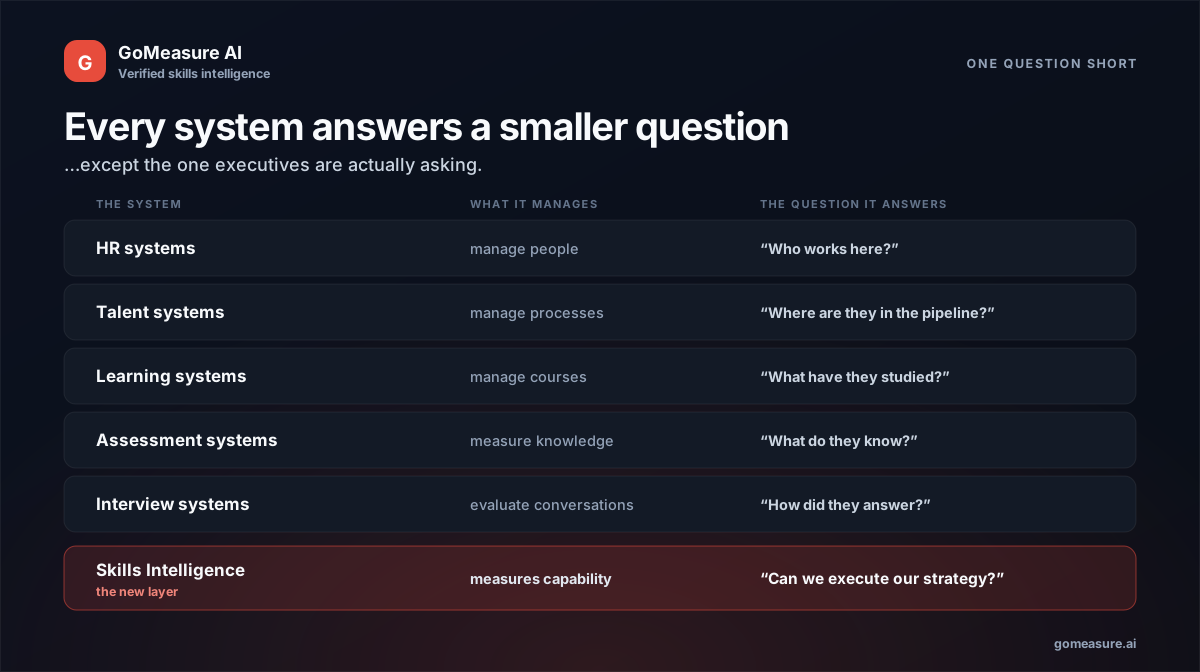
Every one of these is real and useful. But notice what happens when you line them up: they describe people, process, activity and knowledge — and none of them describes capability measured against what the business is trying to do. The stack tells you who your people are and what they've done. It does not tell you what they can execute.
Why no one system can simply add it
The natural reaction is: surely this is a feature — bolt "capability" onto the HCM suite and move on. It doesn't work, for the same reason a filing cabinet can't audit itself. The systems in the stack are systems of record: they store what is entered — self-ratings, course completions, pipeline stages. Answering "can we execute our strategy?" requires something they were never architected to do — measure and verify capability, independently, and connect it to strategy.
That's not a field you add to a record. It's a different kind of system: one that produces evidence rather than storing claims, and reads the result against the capabilities a strategy actually demands. When a job can't be delivered by extending the existing layers, a new layer emerges. That is exactly what has happened.
The evolution has a clear direction
Step back and HR technology has advanced in distinct eras, each adding a layer the last one couldn't provide.
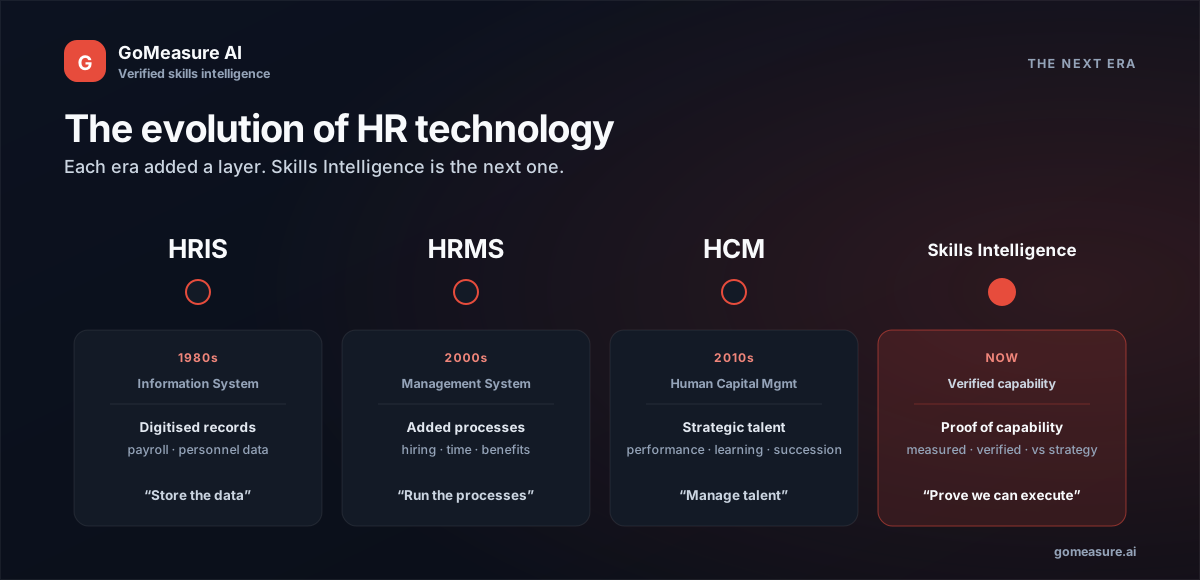
- HRIS digitised the records — payroll and personnel data. Store the data.
- HRMS added the processes — hiring, time, benefits, workflow. Run the processes.
- HCM added strategic talent — performance, learning, succession, engagement. Manage talent.
- Skills Intelligence adds verified capability — proof of what people can do, read against what the strategy needs. Prove we can execute.
Each era didn't replace the last; it added a layer on top. Skills Intelligence is the next layer, and it arrives for the same reason the others did: the questions leaders are asking have outgrown what the existing systems can answer.
Why now
Three forces have pushed this from "nice idea" to "strategic necessity" at the same moment:
- Skills change faster than records can keep up. With skill half-lives now measured in a few years, a static record is out of date almost immediately — capability has to be measured and refreshed, not stored once.
- AI has broken the old proxies. Résumés, self-ratings and even test scores can be generated or gamed. What survives is verified proof of capability — the native output of a Skills Intelligence layer.
- Strategy now turns on capability. Every major initiative — AI adoption, transformation, new markets — is a bet on whether the workforce can execute it. Leaders need to answer that with evidence, not optimism.
What a Skills Intelligence layer actually does
Unlike the systems below it, this layer isn't defined by a process it runs or a record it keeps. It's defined by the question it answers. In practice it does three things the rest of the stack cannot:
- Measures capability as evidence — turning claims and inferences into verified, defensible proof of what a person can actually do.
- Maps capability to strategy — reading the workforce's proven skills against the capabilities a business plan requires, and surfacing where you're strong, thin or exposed.
- Stays current — re-verifying as skills and strategies change, so the capability picture is live rather than a once-a-year snapshot.
It sits across the existing systems, not instead of them — drawing on the people, processes and learning data they hold, and giving back the one thing they can't produce on their own: a trustworthy answer to whether the organisation can do what it has set out to do.
The short version
- Every system in the HR stack answers a narrower question — who works here, where they are, what they've studied, what they know, how they answered.
- None answers the executive question: do we have the capability to execute our business strategy?
- It can't simply be added as a feature — answering it means measuring and verifying capability and mapping it to strategy, which systems of record were never built to do.
- HR technology has evolved HRIS → HRMS → HCM → Skills Intelligence, each era adding the layer the last one lacked.
- Skills Intelligence is that next layer — it measures capability as evidence, maps it to strategy, and keeps it current.
HR systems manage people. Talent systems manage processes. Learning systems manage courses. Assessment systems measure knowledge. Interview systems evaluate conversations.
But none of them answer the question executives increasingly ask: do we have the capability to execute our business strategy?
That is why Skills Intelligence has emerged as its own strategic technology layer.
Answer the question your stack can't.
GoMeasure is the Skills Intelligence layer for your organisation — verified capability, mapped to your strategy, kept current, and fed back into the systems you already run. See whether your workforce can execute your plan, on evidence.
Talk to us about capability Explore the Skills Graph →The whitepaper, the playbooks and new research — by email.
Skills intelligence for HR and business leaders. We'll send the “Jobs to Skills” whitepaper and share new frameworks as we publish them. No noise.
One email now, occasional research later. Unsubscribe anytime.