
Start here
Over the last few months we've written a lot about one question: how do you actually know what your people can do — well enough to decide on it? This page pulls all of it into a single map so you can read it as one argument instead of a pile of blog posts.
It's organised as a journey. Six stages take you from the problem, through the concept and the science, to the transformation, the buying decision and the proof. Read it top to bottom, or jump to the stage that matches where you are.
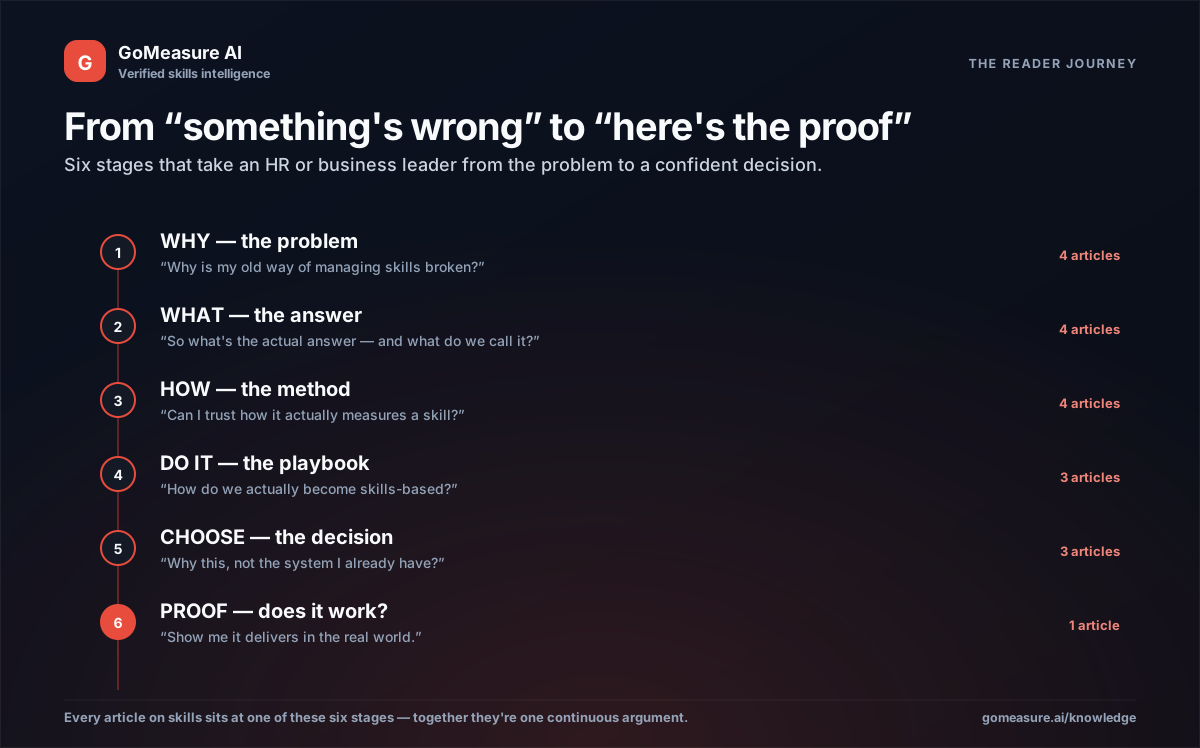
1. Why — the problem
Before the answer, the problem: the old ways of knowing what people can do have quietly stopped working. This is why.
- You have skills data. You just can't trust it. — the twelve reasons skills data goes wrong, and why it turns decisions into guesses.
- Cognitive debt: AI is eroding the skills you can no longer see. — why measuring the human matters more in the AI era, not less.
- Verified, inferred, or proven: why the résumé is breaking. — the difference between guessing at a skill and proving it.
- Performance and skills: why you need both. — why a good result isn't the same as a proven capability.
For the board specifically: the risk your board doesn't measure and the hidden cost of not knowing what your people can do.
2. What — the answer
The answer is a new layer that sits across your existing systems and measures capability itself. Here's what it is and why it's emerged as its own category.
- You've set the strategy. Do you have the skills to execute it? — why Skills Intelligence is now its own strategic layer.
- The rise of work evidence tools. — turning everyday work into validated skill evidence.
- The future of assessment: from the test to the work. — measurement moving from a snapshot into the flow of work.
- The best way to measure a skill is changing. — why good measurement is layered and continuous.
3. How — the method
The part that decides whether any of this is trustworthy: how a skill actually gets measured, and what counts as proof.
- The Skill Proof Standard. (Whitepaper) — the five properties every capability signal needs to count as proof.
- Not all skills prove the same way. — why different skills need different shapes of evidence.
- How adaptive interviews actually work. — CAT, IRT and evidence-anchored scoring, in plain terms.
- Taxonomy, ontology, and why a skills list isn't a skills model. — the structure underneath any real measurement.
4. Do it — the playbook
How an organisation actually makes the shift — the stages, the maturity model, and the step most programmes skip.
- The 2% problem: how a company actually becomes skills-based. — the five-move playbook.
- From Jobs to Skills: a practical framework. (Whitepaper) — the maturity model and the five transformation stages.
- The skills-mapping problem. — why mapping, not measurement, is where transformations stall.
5. Choose — the decision
When you're comparing options: how to tell approaches apart, and why a new layer beats bolting skills onto what you already run.
- Inferred, tested, or proven: a buyer's guide. — how to evaluate any skills tool, with the questions to ask.
- “I already have skills in SuccessFactors — why do I need you?” — recording skills vs proving them.
- Why an off-the-shelf assessment tests a role you don't have. — measuring your must-haves, not a template.
6. Proof — does it actually work?
The part every leader eventually asks for: evidence it delivers in the real world.
- Screening 12,000 graduates in six weeks. (Case study) — evidence-ranked shortlists at scale, no added headcount.
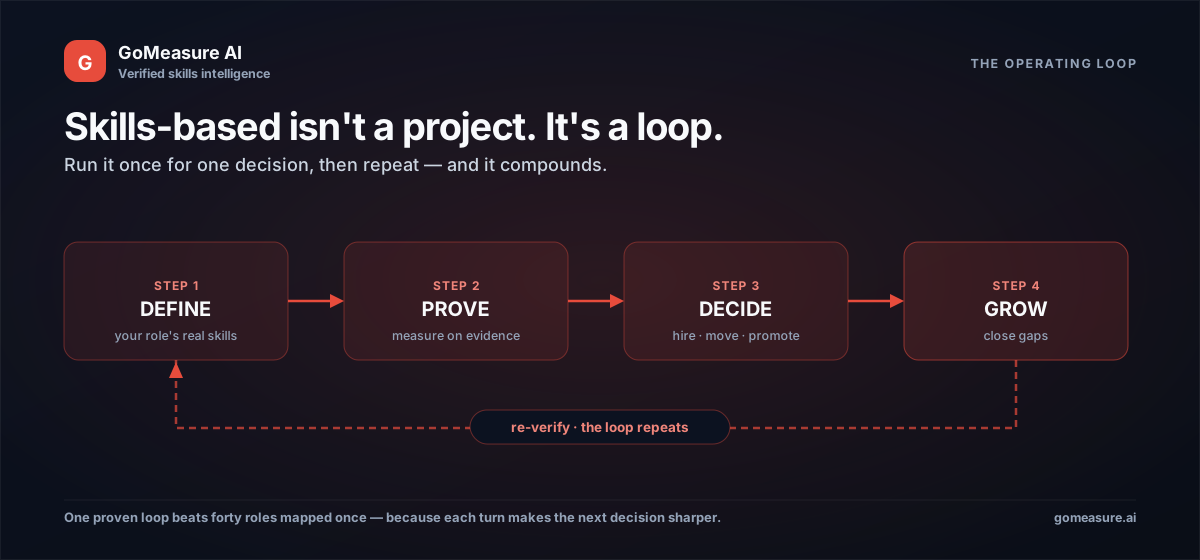
Underneath it all: one loop
Every stage above is really serving a single operating model. A skills-based organisation isn't a project you finish — it's a loop you run: define the skills a decision needs, prove them on evidence, decide, grow, then re-verify. Run it once for one decision, then repeat, and it compounds.
How to use this guide
- New to the idea? Read stages 1–2 to understand the problem and the answer.
- Convincing others? Stages 3–4 give you the science and the transformation playbook.
- Actively comparing tools? Go straight to stage 5, the buying decision.
- Need to see it work? Stage 6 is the proof.
- Want the whole thing in one picture? It's the operating loop above — everything else is detail on it.
Read the theory. Now run the loop once.
Pick one role and one decision. We'll define its real skills, prove them on evidence, and show you the difference between the skills data you have today and skills data you can actually stand behind.
See Skill Proof in Action Explore the platform →The whitepaper, the playbooks and new research — by email.
Skills intelligence for HR and business leaders. We'll send the “Jobs to Skills” whitepaper and share new frameworks as we publish them. No noise.
One email now, occasional research later. Unsubscribe anytime.